
Online Safety
Talking to your Child about Life Online
The internet can be a fantastic place for children, providing them with opportunities to learn, have fun and feel part of a community. Talking about the positives shows that you are interested in all aspects of their online world. Encouraging your child to discuss what they enjoy can be a helpful bridge to talking about safety messages.
Remain open-minded, and remember that as children get older, children will use technology and the internet differently and the challenges they may face will change too. Ask open-ended questions and try not to be be dismissive of online apps, games or trends as this may put off your child from continuing any conversations. Remember that difficult topics of conversation can be planned for, but with online content being so accessible, occasionally they can be needed earlier than you might imagine.
Childnet Online Advice for Parents and Carers is a document with links to websites for advice, review and safety feature websites and how and where to make reports.
For further advice or support, please contact the school office, and they will arrange for somebody to contact you.
Social Media Use
Social media is described as websites and applications that enable users to create and share content or to participate in social networking. Popular examples include Facebook, Snapchat and TikTok.
Many children will want to start using social media at a young age, and often a lot younger than the ages recommended by many platforms of either 13 or 16 years old. Knowing when to allow it is a common worry for parents.
Online Bullying
Online bullying, sometimes called cyberbullying, is any behaviour that uses technology and devices to deliberately target or upset someone. The internet is a tool, but how we use it is up to us. Some people choose to deliberately target or harass others, with the intention of upsetting or humiliating them. This is never okay and, for the victims, can be incredibly difficult and damaging.
Top Tips
-
Always be kind and respectful online. Remember that just because you’re not saying it to someone’s face, doesn’t make it okay. Bullying online is unacceptable.
- Report and block the bullies! Most social media sites and some games have reporting and blocking tools to support users. Our help page has more information on how to report.
- Don’t retaliate. If someone is unkind online, being unkind back won’t help. In fact, it could make the situation worse, and you could end up getting in trouble.
- Save the evidence using screenshots (or a picture of the screen, if a screenshot isn’t possible) of offending messages, conversations or other situations online involving bullying.
- Tell someone! Speak to an adult you trust like a parent, carer or teacher for support and advice on what to do next.
Digital Wellbeing
Digital wellbeing is about how the internet and technology can make us feel. This includes recognising the impact being online can have on:
- Our emotions,
- Mental health and wellbeing
- Physical health and wellbeing.
Technology and the internet should be there to enhance and simplify our lives rather than be a cause of distraction, worry or upset.
However, not all online experiences are positive for young people, and this can have a negative impact on how they feel about themselves, their friendships and relationships and even how they see the wider world.
It is likely that young people may engage with technology and the internet for extended periods of time every day/ week. This extended use of the internet has been reported to leave young people more likely to worry about how long they are spending online and what they have seen. It has also been linked to a sense of loneliness amongst young people. When it comes to using technology and the internet, it all comes down to quality and not quantity, meaning that we should focus on making our use purposeful, and strike a healthy balance between online and offline experiences.
Model healthy behaviour, set boundaries and routines
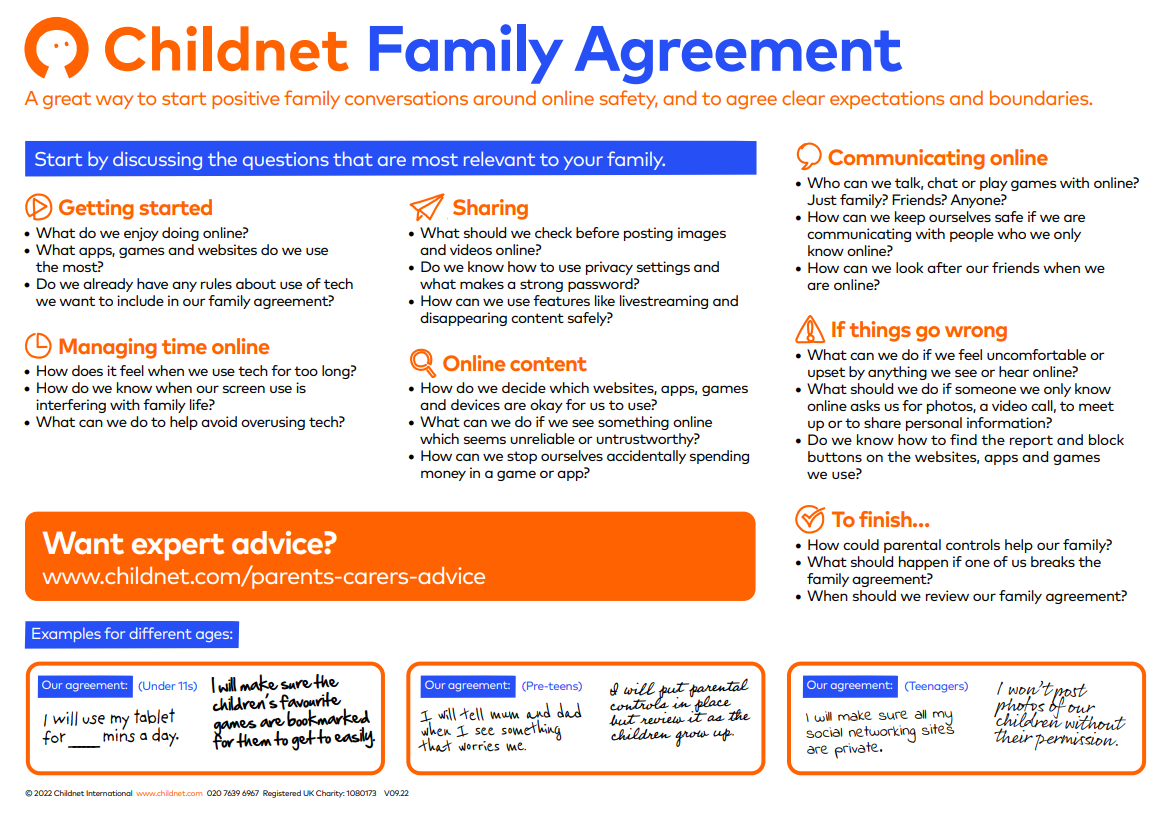
It is important that young people see adults using technology in a healthy way, so model this in your own behaviour. Using a family agreement or establishing a clear routine for younger children can also help set clear boundaries about meaningful use of technology.
Online Grooming
Grooming is a process by which somebody prepares a child for abuse. Grooming can be for all types of abuse, exploitation and radicalisation.
It can happen online, in organisations or in public places. Children can be groomed by people they know, strangers and people who are only a little bit older than they are.
Signs of grooming are:
-
secretive use of technology
-
having unexplained gifts
-
being withdrawn
-
having a much older ‘boyfriend’ or ‘girlfriend’
-
unexplained health problems
-
being fearful of going out
-
going missing from home or school
The process often begins online by an adult pretending to be someone they’re not, for example saying they are the same age as the child online. They usually target children who are flirtatious and have open profiles or those who have low self esteem.
Once they’ve established trust groomers will often isolate the child from friends or family and making the child feel dependent on them. They will often introduce 'secrets' and will blackmail and bribe the child in order to get what they want.